Students at the LoGuidice Educational Center recently took part in a series of hands-on learning experiences that highlighted the intersection of animal welfare, public safety, and compassionate care.
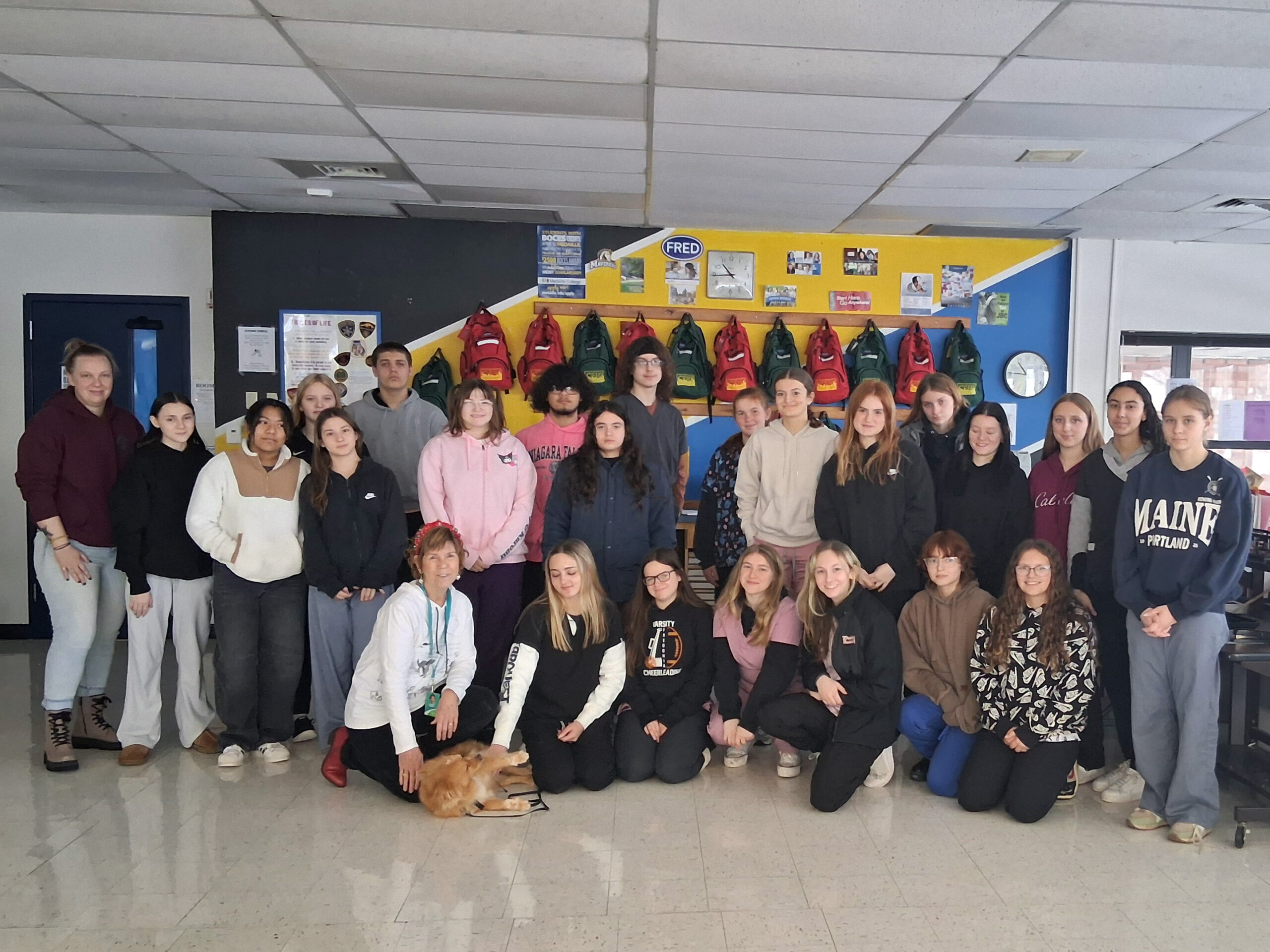
Juniors and seniors in Holly Lemke’s Small Animal Science and Jenni Alessi’s Criminal Justice programs welcomed representatives from the Chautauqua County Humane Society (CCHS) for an in-depth discussion on animal welfare and cruelty prevention.
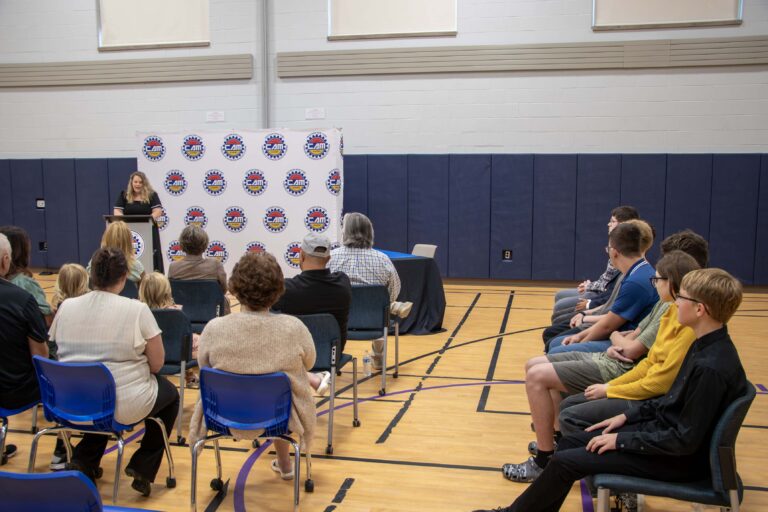
Amanda Sublett, CCHS clinic coordinator and community education and outreach coordinator, along with volunteer Laura Corey, led the presentation, addressing topics such as animal overpopulation, the realities of puppy mills, and New York State animal cruelty laws.
The visit was made especially impactful through the introduction of Dottie, a rescue dog whose journey from neglect to becoming a certified therapy dog offered students a powerful, real-life example of resilience and rehabilitation. Once shy and nervous, Dottie has grown into a gentle companion who now provides comfort to others, demonstrating the transformative power of proper care and compassion.
For Small Animal Science students, the presentation reinforced lessons on animal behavior, handling, and the rehabilitation required for animals from abusive backgrounds. Criminal Justice students gained insight into the investigative side of animal cruelty cases, including evidence collection and collaboration with the District Attorney’s office.
“Dottie’s story perfectly illustrates why our work at the Chautauqua County Humane Society is so vital,” Sublett said. “She is a powerful example of how a second chance and the right care can completely change an animal’s life, and in turn, how they can change ours.”
Building on that real-world learning, the two classes later collaborated on a specialized training session focused on cardiopulmonary resuscitation (CPR) techniques for dogs and cats. The workshop was led by members of the Sheridan Fire Department, including firefighters Bryan Berek and Meredith Przybycien, as well as Assistant Chiefs Rebecca Schafer and Nicholas Sheffield.
Presenters emphasized that while CPR techniques may differ slightly, the core principles of emergency response remain the same whether the patient has two legs or four. Students learned that pet CPR is only performed when an animal is unresponsive, not breathing, and has no detectable heartbeat, serving as a critical intervention until veterinary care is reached.
During the session, students practiced assessing vital signs, performing chest compressions adapted for various animal sizes, administering rescue breaths, and maintaining the industry-standard 30:2 compression-to-breath ratio at the proper rhythm. Fire department personnel stressed the importance of swift action and continuous CPR during transport to an emergency veterinary clinic.