
The arts do more than teach music, theater, or visual expression. They help students build confidence, develop empathy and discover new possibilities.
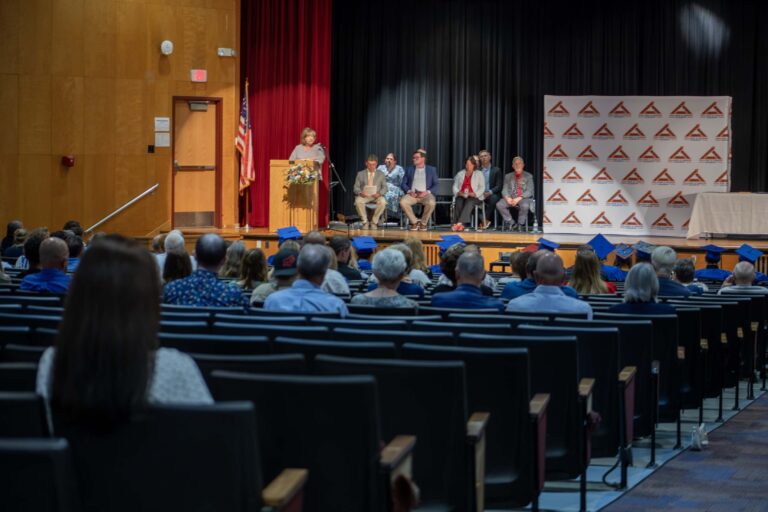
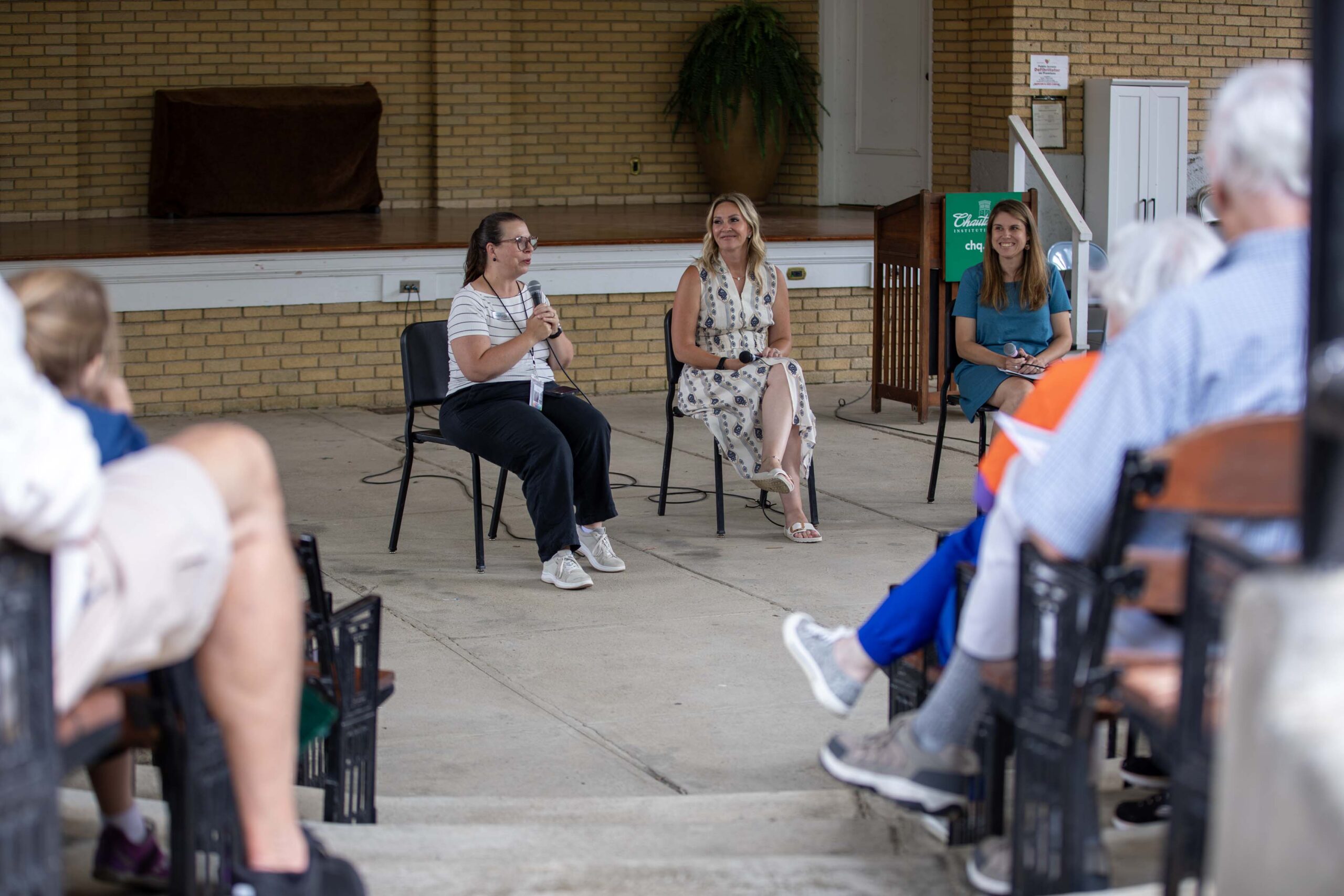
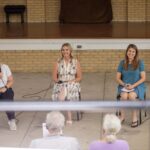
That was the message shared during a panel discussion at Chautauqua Institution highlighting the impact of the institution’s Arts Education programs in schools across Chautauqua County.
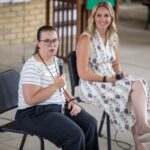
Moderated by Suzanne Fassett-Wright, Chautauqua Institution’s Director of Arts Education, the discussion featured Samantha Cashmore, a special education teacher at the Hewes Educational Center with Erie 2-Chautauqua-Cattaraugus BOCES, and Nikki Kane, a special education teacher at Southwestern Central School. Together, they reflected on years of partnership with Chautauqua Institution and the meaningful ways arts programming has enhanced learning for students with diverse needs.
“Our work is about long-term relationships with schools,” Fassett-Wright said. “We ask educators what they need, and then we work together to create programs that support both their curriculum and their students.”
Each year, Chautauqua Institution’s Arts Education department serves between 5,000 and 6,000 students throughout the county through programs including Feelin’ the Beat drumming, Young Playwrights Project, Opera in the Schools and professional development for educators.
MEETING STUDENTS WHERE THEY ARE
Both Cashmore and Kane emphasized that the programs succeed because they are designed around students’ individual needs rather than a one-size-fits-all approach.
Cashmore teaches in a highly structured special education classroom serving students whose social-emotional needs require additional support beyond their home districts.
“Our students need opportunities to express themselves in ways that feel safe,” she said. “The drumming program isn’t just another thing we have to fit into our day. It naturally supports the social-emotional standards we’re already expected to teach while allowing students to be themselves.”
The Feelin’ the Beat program combines drumming with social-emotional learning, encouraging students to recognize and express emotions, build empathy and strengthen relationships.
Kane said the experience has been especially meaningful for students who struggle with communication.
“Some of my students are nonverbal or communicate through technology,” she said. “Through drumming, they can express feelings without needing words. They shine during these sessions, and that confidence carries into other parts of the school day.”
Both educators noted that the program validates students’ emotions rather than discouraging them.
“When a student pounds the drum because they’re frustrated, Suzanne doesn’t tell them they’re wrong,” Cashmore explained. “She acknowledges what they’re feeling and helps them learn appropriate ways to express it. That validation is incredibly powerful.”
BUILDING CONFIDENCE THROUGH THE ARTS
Beyond music, the panel highlighted the Young Playwrights Project, which teaches elementary students how to write original plays before partnering with professional actors and community volunteers who bring each student’s work to life.
Initially unsure how her students would respond, Cashmore said the experience quickly became one of the most valuable parts of her curriculum.
“I didn’t think my students could write plays,” she admitted. “Honestly, I wasn’t sure I could teach them how. But the teaching artists believed in my students before they believed in themselves.”
The program has become an annual tradition in her classroom.
“My students feel heard,” Cashmore said. “They’re not defined by their disabilities. They’re playwrights. They’re artists. That’s something they’ll carry with them.”
Kane agreed, noting that many special education students are acutely aware they are different from their peers.
“They know when they’re in a more restrictive classroom,” she said. “These programs give them opportunities to succeed alongside other students and discover talents they didn’t know they had.”
BEYOND ACADEMICS
Throughout the discussion, both teachers pointed to one of today’s greatest educational challenges: excessive screen time.
Students, they said, increasingly need opportunities to collaborate, communicate and engage with one another in meaningful ways.
“They’re surrounded by technology all the time,” Cashmore said. “Programs like these give them real human interaction. They teach communication, empathy and relationship-building — skills they’ll need for the rest of their lives.”
Kane added that arts experiences often expose students to opportunities they might never otherwise have.
“Some of our students have never attended a theater performance or visited places many of us take for granted,” she said. “When we can bring those experiences to them, we’re opening doors they didn’t know existed.”
Fassett-Wright noted that many children in Chautauqua County face significant economic barriers, making access to arts programming even more important.
“What educators tell us they need most is possibility,” she said. “They want students to see what’s possible for themselves. That’s what the arts can do.”
PARTNERSHIPS THAT LAST
A recurring theme throughout the conversation was the importance of sustained relationships between schools and Chautauqua Institution.
Rather than offering one-time assemblies, Arts Education staff work closely with teachers to tailor programming to each classroom, collaborating throughout the year to reinforce social-emotional learning and academic goals.
“It wasn’t perfect the first year,” Kane said. “I was nervous. Some of my students were nervous. But Suzanne took the time to get to know us, understand our classroom and build trust.”
That trust has grown over nearly a decade.
“When students move to another school and see the drums or see ‘Miss Suzanne’ again, they immediately know they’re in a place where they belong,” Fassett-Wright said. “Watching them carry that confidence with them is one of the greatest joys of this work.”
As the discussion concluded, both teachers expressed gratitude that these opportunities continue to be available to students throughout the county.
“There are so many incredible kids in Chautauqua County,” Cashmore said. “Sometimes they just need someone to believe in them and give them the chance to discover who they are.”