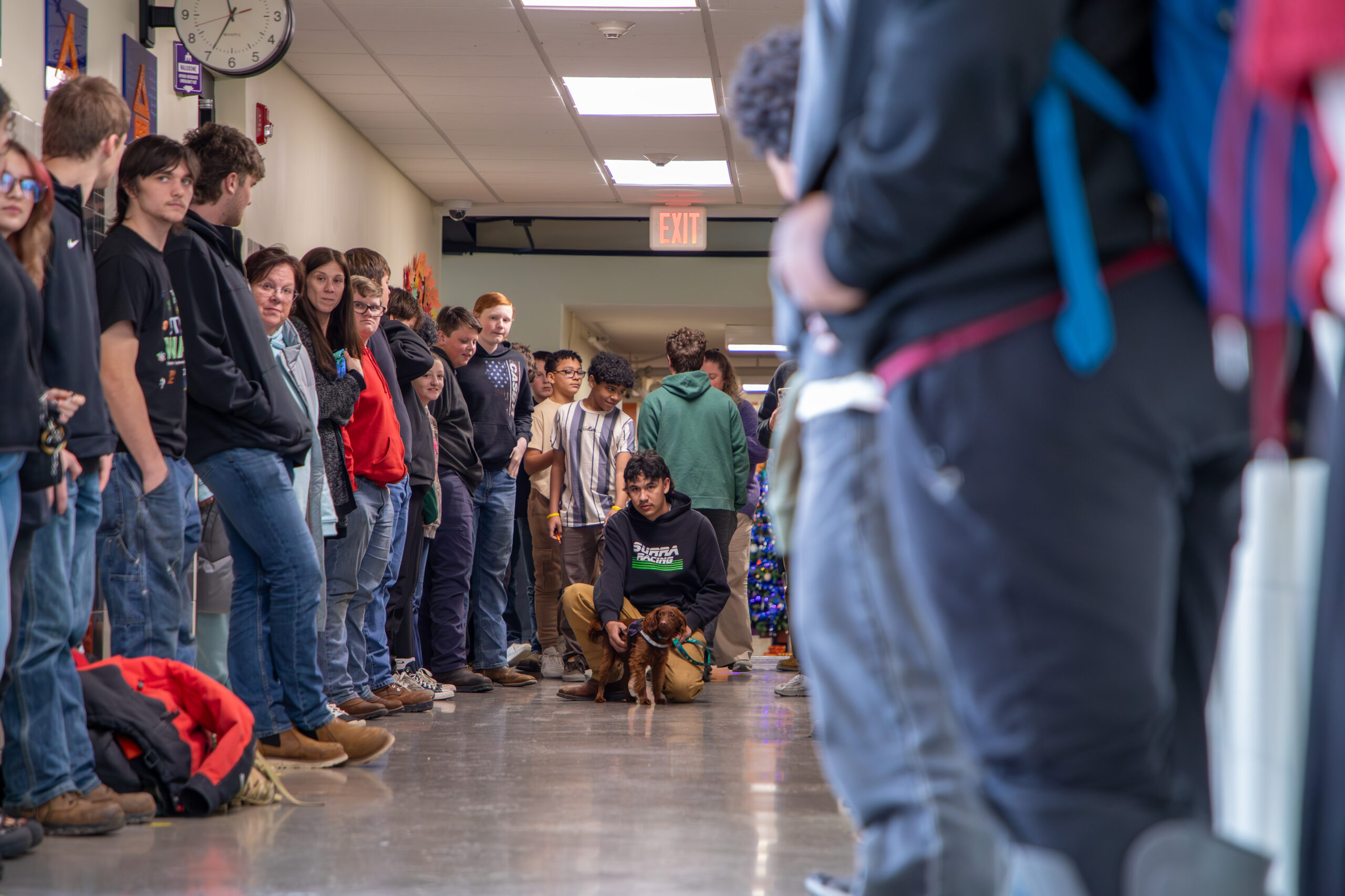
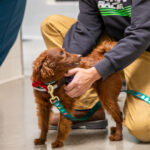



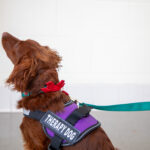
Students recently lined the hallway at WNY P-TECH in Dunkirk to recognize Penny Lane, a 1½-year-old Mini Goldendoodle Dachshund mix, who completed her training to become a certified therapy dog.
Penny Lane, who belongs to WNY P-TECH school social worker Melissa Pietrkiewicz, earned her certification through Shaylah’s Canine Commands in Forestville. Owner and trainer Kaleigh Bell says the journey to becoming a therapy dog is both structured and intentional, beginning with one key question: Does the dog have what it takes?
“All therapy dogs start out with an evaluation to make sure they have the proper temperament,” Bell explained. “Some begin as early as puppies, coming in for a consultation when they’re about 16 weeks old.”
Once they reach six months of age, dogs enter a six-week basic obedience course, where they learn foundational skills such as following commands, staying focused on their handler, and managing their excitement.
“One of the big things is learning how to be excited but not over the top,” Bell said. “They learn to keep their composure.”
After mastering obedience, dogs move into a second six-week training — this one specifically for therapy work. The lessons are highly practical, focusing on navigating medical and school equipment, becoming comfortable around wheelchairs and walkers, and practicing appropriate interactions with people of all ages. The training also includes real-world observations in schools or nursing homes, depending on where the dog is expected to serve.
While the formal training spans approximately 12 weeks, Bell often incorporates a pause between courses to allow each dog time to absorb its new skills. Therapy dog training typically begins when dogs are around a year old — old enough to have matured but still eager to learn.
Once certified, therapy dogs have access to a wide range of community spaces. “Our training is pretty similar, whether the dog will be in a school or a nursing home,” Bell said. “Once certified, they can go into schools that grant access, and many local nursing homes and hospitals welcome therapy dogs as well.”
Their purpose in a school setting, Bell emphasized, is pretty simple. “They provide happiness,” she said. “They increase student morale and staff morale, too. For kids who may be dealing with stress or a challenging home environment, looking forward to seeing the dog can make a significant difference. Dogs are incredibly supportive for emotional well-being across the board.”
Pietrkiewicz worked closely with Bell throughout the process, noting that a portion of Penny Lane’s training took place at the school. “We worked with Kaleigh at her location, and then we practiced her skills out in public,” she said. Penny Lane also participated in therapy dog events as part of her preparation.
Now fully certified, Penny Lane is expected to be on-site at WNY P-TECH a couple of times each week, or as needed, to support students and staff.