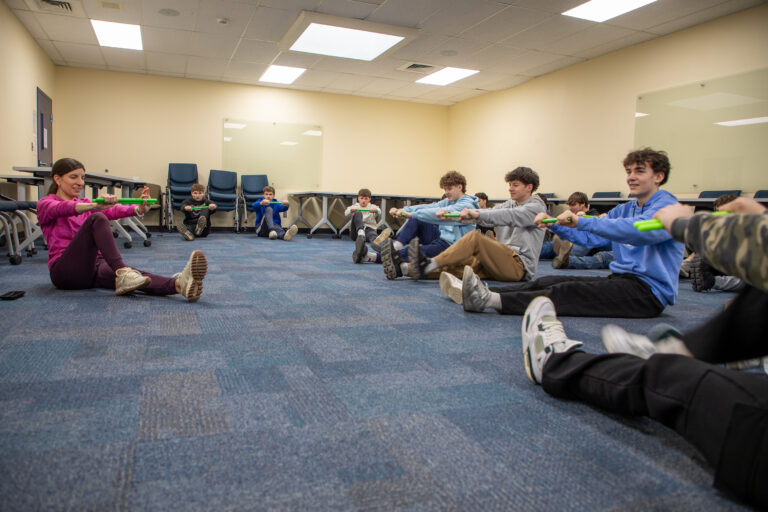




Students at WNY P-TECH in Dunkirk recently rolled up their sleeves for an industry-focused challenge that put their STEM skills to the test.
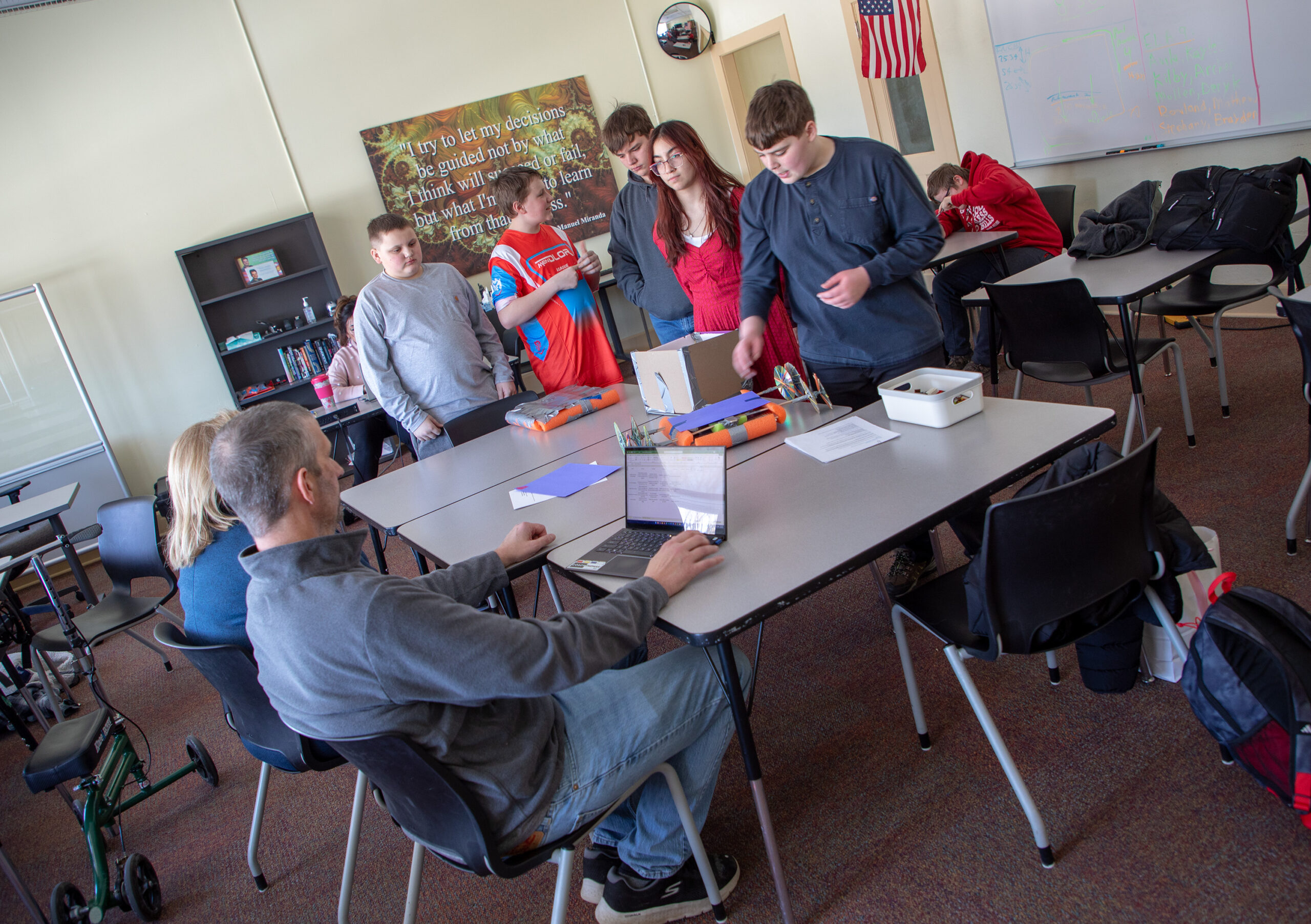
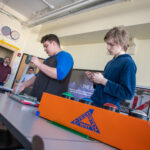
Led by Dan Thomas, a recently retired Southwestern Central School District educator, and Cindy Aronson, Chautauqua director of Dream It Do It WNY, students were tasked with designing a scaled-down prototype machine capable of moving a desktop CNC Lathe from a vehicle to the school’s Machine Tool shop.
The challenge, one of several held each year, pushed students to think creatively and practically, simulating real-world scenarios they may encounter in manufacturing careers. Many teams developed similar solutions, including lift systems that could move the lathe and wheel it from one location to another — showcasing both ingenuity and teamwork.
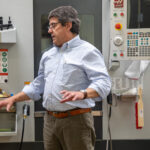
For Thomas, who brings more than 30 years of STEM and technology education experience, moments like these are the highlight of his work.
“I love to see the moment when they just get it. I love that,” he said. “I love the interaction with the kids. That’s one of the things I missed since I retired — the day-to-day interaction with the kids. Everybody in the room knows something I don’t, and I learn something every day from them.”
Thomas emphasized that experiences like these go beyond traditional classroom learning. “I get to see them thinking, and I get to see them applying what they’re learning,” he said. “That’s a huge part of what schools might be missing today. P-TECH does a great job of that. These are skills they might need in a job, and there’s a lot of manufacturing commonalities.”
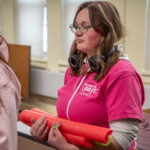
Before the main challenge, students tackled a design task with LOGO bricks: building a material-handling system that moves a fragile part without being carried by hand. This warm-up gave students a chance to experiment and problem-solve on a smaller scale.
When asked why it’s important for students to experience hands-on work in manufacturing, Thomas highlighted the changing nature of knowledge in the modern world.
“Even beyond manufacturing, with AI and the internet, information isn’t the premium it used to be; knowledge is. By learning problem-solving skills this way, students start to own the learning,” he said. “Years from now, when they’re in the industry, they’ll remember these experiences, not a worksheet or a test. These are the skills you can’t explicitly teach. They learn collaboration, critical thinking, and problem-solving naturally through challenges like this.”